A Filling at Forty Miles: The NHS Dental Gap Facing Bridgend Households
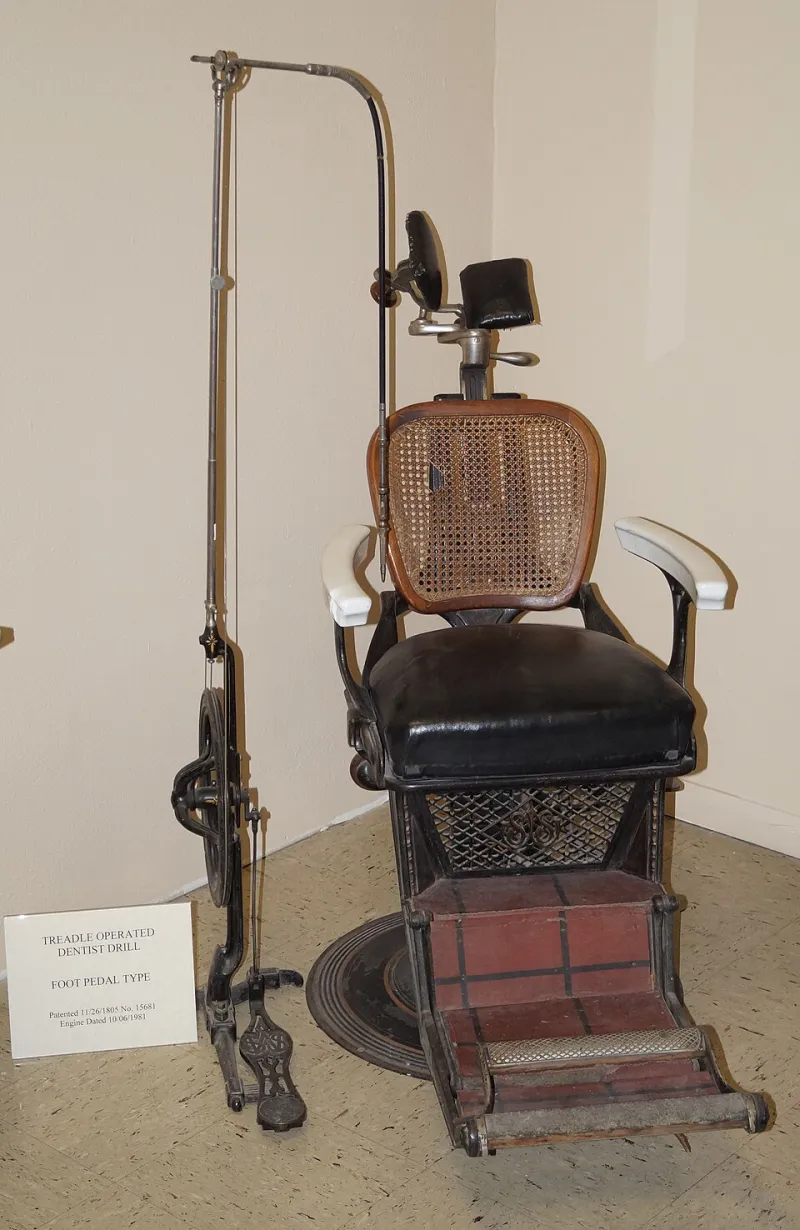
Photo: NearEMPTiness, CC BY-SA 4.0, via Wikimedia Commons
Ask a constituent in the Garw Valley what NHS dentistry looks like in 2026 and the answer is rarely about teeth. It is about buses that stop running at six, unpaid time off work, and whether a tank of petrol can stretch to a practice in another county borough and back.
Over the past twelve months my constituency office has logged dental access as one of the three most common reasons people write to me. That is a change. Housing and social security cases still dominate the postbag, but the letters about teeth have a particular quality: they are written by people who have done everything asked of them and still cannot get seen.
What the casework tells us
One resident from Maesteg — we will call her Mrs H — rang eleven practices in a fortnight. Nine were not accepting adult NHS patients at all; two offered a private consultation starting at £65 before any treatment. She has a chronic heart condition and has been advised that untreated gum disease is a risk she should not carry. She is now on a waiting list in Swansea, forty minutes away by car and unreachable by public transport before nine in the morning.
A father in Caerau describes ringing around for his son, aged nine, after the family's practice closed its NHS list in the spring. Children are meant to be a priority, and in many places they still are — but priority in principle is not the same as a chair, a nurse and a dentist in the same room at the same time.
These are not isolated accounts. They are the normal experience of a significant minority of households in this constituency, and they are concentrated in the communities least able to absorb the cost of travelling out of them.
What the figures show
My office submitted Freedom of Information requests to Cwm Taf Morgannwg University Health Board, which commissions dental services across Bridgend, Rhondda Cynon Taf and Merthyr Tydfil. The response, received in September 2026, confirms what the casework suggested.
In the twelve months to 31 March 2026, the health board recorded several thousand enquiries from patients seeking an NHS dentist in the Bridgend locality. Fewer than one in seven of those enquiries resulted in an offer of an NHS appointment within the year. Roughly nine in ten practices contacted in a spot audit were closed to new adult NHS patients, and a majority were closed to new child patients as well.
Those headline numbers matter less than their geography. Access is not uniformly poor; it is unevenly poor, and the pattern follows the valleys. Practices cluster where car ownership is high and where private demand sustains a mixed list. In the upper wards — the Garw, the Ogmore, the Llynfi — the nearest practice accepting new NHS patients has, at various points this year, been outside the county borough entirely.
A postcode lottery is a lazy phrase for something more specific: a travel lottery, layered on top of an income lottery, layered on top of a workforce shortage that no single practice can solve alone.
The devolution wrinkle
Dentistry is devolved. Commissioning sits with the health board under the direction of the Welsh Government, and the contract reform that will ultimately determine whether NHS dentistry is viable in these communities is being designed in Cardiff Bay, not Westminster.
That does not make this a matter on which a Member of Parliament has nothing to say — far from it. Pay, pensions and the wider NHS workforce levers remain reserved, and the Treasury's grip on departmental budgets shapes what is available to the devolved administrations through the block grant. I have therefore pursued this on two fronts: written questions to the Wales Office and the Department of Health and Social Care on workforce and recruitment incentives, and close working with colleagues in the Senedd who hold the commissioning levers.
Constituents are entitled to be impatient with that division of responsibility. My job is to make the two systems talk to one another rather than to use the boundary as an excuse.
Three practical asks
A campaign that ends with a demand for "more funding" achieves nothing. Here is what I am arguing for, in order of deliverability.
A mobile dental unit for the valleys. A single equipped vehicle, staffed on a rota basis and sited at agreed community anchors — a leisure centre in Maesteg, a school in the Garw, a health centre in Ogmore Vale — would not solve the workforce crisis, but it would clear the urgent and child caseloads that currently go untreated while people wait for a permanent list to open. Capital costs are modest; the health board has the commissioning power; the obstacle is operational will.
A training pipeline rooted in the constituency. Wales trains too few dental therapists and hygienists for its own needs, and the clinical work most associated with prevention — the work that keeps a child out of a surgery chair for life — can be safely delivered by them. I am asking Health Education and Improvement Wales and Bridgend College to examine a dental therapy pathway built on the college's existing health and science provision, with clinical placement capacity negotiated alongside it.
Contract reform that pays for NHS work. No amount of recruitment advertising will fill a chair if the NHS activity on offer pays less than the private alternatives. The Welsh Government's reform programme must be judged by one test above all others: does it make an NHS list a sustainable business decision for a practice in a valleys community?
What you can do
If you are struggling to access an NHS dentist, please contact my office. Individual cases are more than anecdotes — anonymised and aggregated, they are the evidence base for everything above, and they carry weight with the health board in a way that a general complaint does not.
There is no version of this in which a constituency gets its dental provision back without sustained pressure from the people who live in it. Teeth are not a luxury item, and a forty-mile round trip for a filling is not a reasonable expectation to place on anybody.