No Wheels, No Way Out: The 2026 Bridgend Bus Audit Exposing the Valleys Left Behind
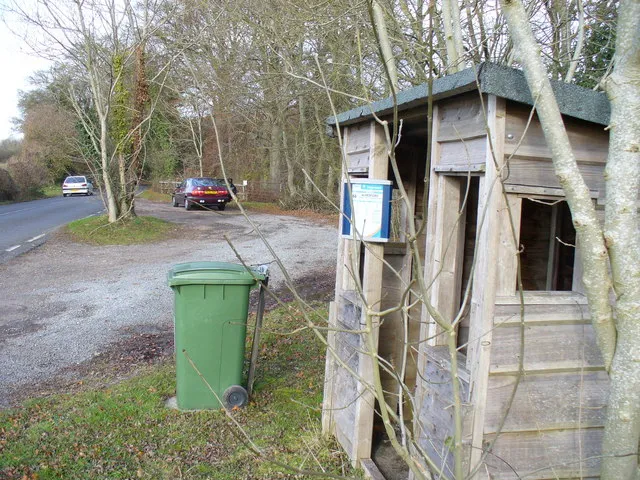
Photo: Colin Smith, CC BY-SA 2.0, via Wikimedia Commons
On a wet Tuesday morning in Ogmore Vale, Margaret waits at a stop that no longer has a timetable. The 9.15 to Bridgend has gone. The next service, if it comes, will not get her to the hospital in time for her appointment. Margaret is not a statistic. She is one of more than 300 residents who wrote to my office during the 2026 Bridgend Bus Audit, and her story is repeated from Blaengarw to Porthcawl.
This autumn, my team and a group of volunteer researchers set out to map every registered bus route serving Bridgend county borough. We wanted to test a simple question: can a person without a car in our valleys still reach work, education, healthcare and family? The answer, route by route, is increasingly no.
What the audit did
We combined timetable data from operators, information published by Bridgend County Borough Council, and evidence submitted by passengers. Volunteers logged first and last buses, Sunday frequencies, evening journeys and the gaps between communities. We did not rely on a single source. Where a route appeared on paper but failed in practice, we recorded the missed connections and the cancelled journeys. The result is not a snapshot of one bad week. It is a map of a service that is being quietly withdrawn.
The routes that hold, and the routes that do not
The Bridgend to Maesteg corridor and the Bridgend to Porthcawl corridor remain the spine of the network. Daytime frequencies are still recognisable, though evening journeys are thin and Sunday services are patchy. For many residents, however, the journey begins after the spine has ended. In the Llynfi, Garw and Ogmore valleys, the audit found peak journeys trimmed, Saturday frequencies reduced and Sunday services absent altogether. Communities such as Nant-y-moel, Pontycymer, Blaengarw, Caerau and Cymmer are left with long gaps that turn a short trip into a whole-day expedition.
The picture is not uniform. Pyle, Kenfig Hill and Cornelly still have links to Bridgend and Port Talbot, but cross-boundary connections have weakened. Pencoed retains rail options, yet bus links to industrial estates and further education are less reliable than the timetable suggests. In Porthcawl, seasonal demand masks a year-round problem: residents without a car can reach the town centre, but not always the hospital, the college or the evening shift.
Stories from the stops
A carer from Blaengarw told us she has cut her working hours because the return bus leaves before her shift ends. A student from Maesteg described missing lectures when a connection at Bridgend bus station is not held. A pensioner in Porthcawl said she now pays for taxis to visit her sister in hospital, spending a weekly food budget on two journeys. A worker from Pyle explained that an early shift is possible only when a colleague drives him.
These are not isolated complaints. They are the practical consequences of a network designed around commercial viability rather than public need. When a bus is removed, the cost does not disappear. It moves to the NHS, to social care, to the benefit bill and to the families who step in when the state steps back.
Why this is happening
The funding system is part of the problem. The Bus Services Support Grant in Wales has been stretched across more routes and higher costs, while operators make commercial decisions about where and when to run. Wales has the powers to plan and franchise bus networks, but powers without stable funding do not put buses on the road. At UK level, short-term competitive funding pots have forced councils and operators into bidding wars rather than long-term planning. Driver shortages, fuel costs and depot closures have made matters worse.
The result is a postcode lottery. A resident in one valley may have a half-hourly service; a resident ten minutes away may have two buses a day. That is not a transport network. It is a residual service.
What we are asking for
The Welsh Government should ring-fence funding for lifeline bus routes, publish a route-by-route accessibility map and protect evening and Sunday journeys where they are the only link to work, care or education. It should use its franchising powers to plan a network around need, not just profit, and it should fund community transport properly rather than treating it as an afterthought.
The UK Government should provide a multi-year transport settlement instead of short-term competitive pots, and it should ensure that Wales receives fair consequentials for bus investment. The Barnett formula is not a substitute for a plan.
Bridgend County Borough Council also has a role. Residents deserve transparent information about which routes are at risk, what funding is available and how decisions are made. The audit should become a permanent, public tool, not a one-off exercise.
Join the audit
My office will continue to collect evidence from passengers, carers, students and workers. If a bus route matters to you, tell us. If a timetable has changed without notice, tell us. If you have given up on the bus altogether, tell us that too. The more complete our map, the harder it becomes for anyone to pretend that the valleys are connected when they are not.
Margaret is still waiting. She deserves a bus, not a promise. So do thousands of others across Bridgend, Maesteg, Porthcawl and the valleys.