Beyond the Counter: Why a Banking Hub Is Not the Same as a Bank
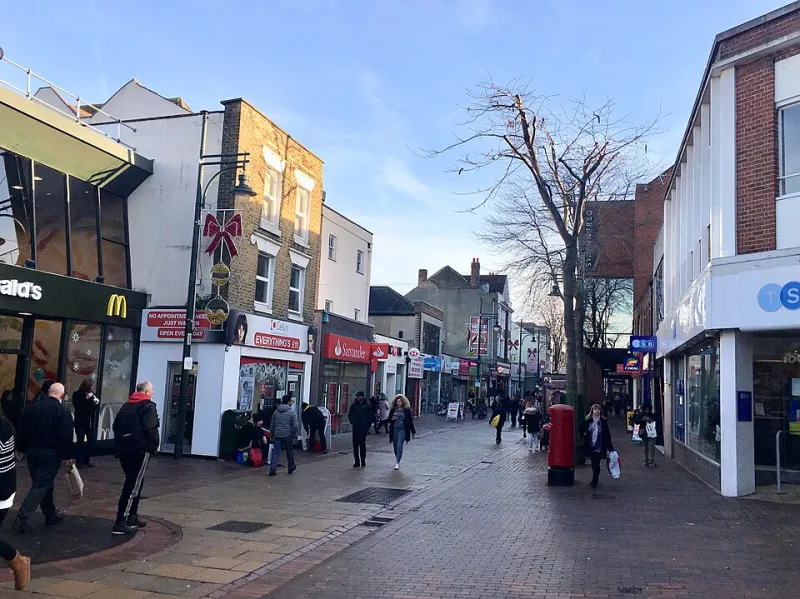
Photo: Chris Whippet , CC BY-SA 2.0, via Wikimedia Commons
When a bank branch closes, the sign comes down quickly. The consequences take much longer to disappear. For many households in Porthcawl, Maesteg and the communities between, the loss of face-to-face banking has meant longer journeys, greater reliance on digital services, and a quiet erosion of confidence in institutions that once felt local.
The 2026 banking hub rollout is therefore welcome. It recognises, at last, that cash and counter services are part of the infrastructure of everyday life. But it would be a mistake to treat a banking hub as a like-for-like replacement for the branch that was lost. A hub can restore access. It cannot, on its own, restore the full relationship that many residents and small businesses once had with their bank.
What a banking hub actually delivers
A banking hub is a shared space on the high street. Different banks take turns to provide counter services, while a community banker from one of the participating banks is available to help with more complex enquiries. Cash withdrawals and deposits are available, and the hub model is designed to preserve access to cash where traditional branches have disappeared.
That matters. LINK, the body that assesses cash access, and Cash Access UK, which delivers hubs, have been clear that communities need reasonable access to cash and face-to-face help. For older residents who do not bank online, for carers managing household finances, and for small traders who still handle takings in notes and coins, a hub can be a lifeline.
But the model has limits. A hub is not a full branch. It does not offer the same range of lending decisions, mortgage advice or business banking support. Opening hours may be shared between institutions. Appointments may be needed for matters that once could be resolved at a counter on a Saturday morning. These are not minor details. They determine whether the hub is genuinely useful or merely a symbol of retreat.
The constituency picture
The pattern across Bridgend county borough will be familiar to anyone who has watched high streets change. Porthcawl has a large older population and a seasonal visitor economy, both of which depend on reliable cash access. Maesteg and the upper Llynfi valley have communities where car ownership is not universal and bus services are thin. Bridgend town centre serves as a hub for surrounding villages, but for people travelling from the valleys, a trip into town is not always simple.
The 2026 rollout offers an opportunity to close some of those gaps. Where hubs are planned or opening, the immediate test is location. A hub that is technically in the constituency but practically inaccessible by public transport will not meet the need. The second test is hours. A service that closes at 3pm may suit some workers but not shift workers, carers or parents. The third test is awareness. Residents cannot use a service they do not know exists.
This office has heard from constituents who feel that each closure was presented as a technical change rather than a social one. They are right. Access to banking is not a niche concern. It is part of how people budget, pay bills, run businesses and care for relatives. When it goes, the cost is paid in time, travel and stress.
Who still falls through the cracks
Even a well-run hub will not solve every problem. Digital exclusion remains significant. Some residents do not have smartphones, broadband or the confidence to manage money online. Others have disabilities that make online banking difficult or impossible. A hub helps, but only if it is physically accessible, properly staffed and willing to spend time with people who need assistance.
Small businesses face particular gaps. Many still need to deposit cash, obtain change or discuss borrowing. A shared counter may handle the basics, but business advice and lending decisions often sit elsewhere. If the hub becomes a cash-only front door with no route to proper business support, the local economy will feel the difference.
There is also the question of privacy. Some financial matters are sensitive. A shared space can feel less confidential than a traditional branch. The design of hubs, the availability of private rooms and the training of staff will matter enormously.
What local pressure can do
The 2026 rollout should not be treated as a finished product. It is a settlement that residents can shape. Local campaigners, councillors, community groups and this office can press for hubs that are accessible, well-signposted and open at times that reflect real lives. We can ask for outreach to care homes, community centres and small business networks. We can insist that usage data is published so that decisions about hours and staffing are evidence-led.
Bridgend County Borough Council has a role in planning and transport. Welsh Government has a role in fair access to cash. The UK Government and the regulators must ensure that the hub programme is not used to wash away the consequences of branch closures without proper scrutiny. A ribbon-cutting is not an access strategy.
A test for 2026
The measure of the banking hub rollout should not be the number of openings alone. It should be whether a pensioner in Porthcawl can reach a counter without a long journey; whether a trader in Maesteg can deposit takings before the school run; whether a carer in the valleys can get help with a complex query without being pushed to a call centre.
If the hubs pass that test, they will be a genuine public good. If they do not, they will become another example of services being redesigned around institutions rather than people. My office will continue to collect residents' experiences and press for the former. Face-to-face banking is not a luxury of the past. It is a practical necessity of the present, and it should be treated as such.