Patch, Repeat, Repeat: An Atlas of the Bridgend Roads That Never Quite Get Fixed
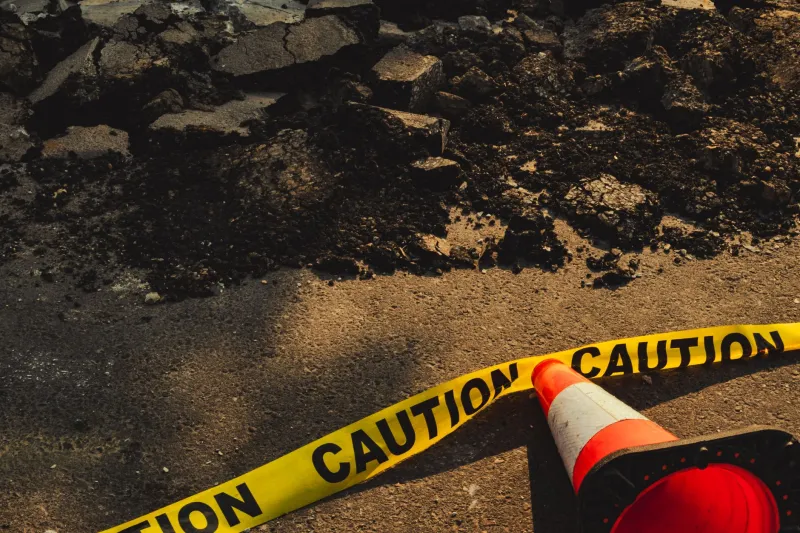
There is no subject that fills the postbag more reliably than the state of the road. Not housing, not bin collections, not the state of the town centre on a Saturday — the road. A cracked kerb outside a school gate, a crater on a commuter route into Bridgend station, a trench that reappears every March on the same bend in the same valley. The complaints are rarely about potholes in the abstract. They are about being bounced, twice, on the way to a hospital appointment.
This piece is an attempt to move the argument on from outrage to arithmetic. Patch it, watch it fail, patch it again is not a saving. It is a subscription, paid annually, for a road that never improves.
What the repair records show
Most council maintenance falls into two pots. Reactive work fills a defect once it is reported or spotted on inspection. Planned work resurfaces a length of carriageway for a generation. When the reactive pot is squeezed and the planned pot is deferred, the same fifty metres get visited every year.
A single patch on a failing surface has a working life measured in a couple of winters, not a couple of decades. Per square metre, it is cheap. Across a decade, on a road that needs structural work, it can cost more than doing the job properly once — before the vehicle damage, the insurance claims and the closure of a lane for a day are counted in.
The money that leaves the council in pothole compensation is the clearest evidence of this false economy, and it is published. Every settlement is a patch that failed and was paid for twice.
How a pothole actually gets fixed
Reporting works, but only if the report survives the first forty-eight hours. Here is the plain-English version.
Councils inspect roads on a hierarchy. Busy routes are looked at more often than quiet residential streets, and the frequency is set out in a published inspection manual. A defect deep enough to be a hazard — commonly around 40mm in depth on a trafficked route — is treated as an emergency and made safe quickly. A shallower defect is logged and monitored until a scheduled programme reaches it, which may be months.
The council has a legal duty under the Highways Act 1980 to maintain the network, but it also has a statutory defence if it can show it had a reasonable system of inspection and repair. In practice, that means a defect nobody reported and no inspector recorded is a defect the council can argue it did not know about. Reporting is therefore not a courtesy. It is the mechanism that creates the legal duty to act.
What the 2026 funding settlements mean
Three things shape this year's roads budget in Bridgend.
The Welsh Government settlement. The unhypothecated local government settlement agreed at the start of this financial year sets the envelope. Road maintenance is revenue-hungry — crews, plant, materials — while resurfacing is capital. When the revenue side tightens, patching is what gets cut back to, because it is cheaper in-year.
The legacy of the Roads Review. The Welsh Government's 2023 roads review shifted emphasis away from new-build schemes and towards maintaining what exists. That is the right instinct. But the maintenance budget has not yet been re-based to match the ambition, and the backlog the council reports for its own network still runs into eight figures.
The HS2 consequential. The 2023 decision to redirect High Speed 2 funding into English road schemes produced a Barnett consequential for Wales, but no ring-fenced roads fund. Welsh Ministers have had to choose between competing pressures ever since, and councils have felt the result as a slow drift in the resurfacing schedule.
The atlas: seven places that keep being patched
These are the locations that recur most often in residents' reports and in the repair records I have seen this year. They are not the only ones, but they are the ones where a pattern, rather than an incident, is visible.
1. The A4061 over the Bwlch. Freeze-thaw on an exposed mountain route means the surface breaks up faster than any patch can hold. It is a strategic route for the valleys and it is being maintained as though it were a lane.
2. Heol West Plas, Coity. Repeated trench reinstatements around new housing have left a patchwork that fails at the joints. Residents describe a road that shakes the house before it reaches it.
3. Penprysg Road, Pencoed. A commuter route to the station, heavily used by buses and by parents on the school run, with edge deterioration that gets banded and re-banded rather than rebuilt.
4. Bridgend Road, Aberkenfig. A pinch point where drainage failure undermines the surface from beneath. Patching the top is treating a symptom and paying for it annually.
5. Victoria Street and Mill Street, Pontycymer. Steep, narrow and drained badly. Water sits, frost lifts the surface, and the repair is washed out by the next heavy rain.
6. Ffordd Cadfan and the Brackla estate spine roads. Estate roads built in the 1970s and 1980s are now reaching the end of their design life all at once, and they are being held together one defect at a time.
7. Newton Nottage Road, Porthcawl. Coastal flooding and salt take a toll that inland comparisons miss. The same stretch is closed, patched and reopened on a cycle that residents can predict better than the programme can.
A reporting checklist that gets results
When you log a defect, you are creating the record the council will rely on later. Make it hard to dismiss.
- Photograph it with something for scale — a coin, a shoe, a tape measure. A depth measurement is the difference between an emergency and a note.
- Photograph the location, not just the hole. Include a street sign, a shopfront or a house number so the report can be pinned precisely.
- Note the direction of travel and the lane. A defect reported on the wrong carriageway can be logged as not found.
- Report each defect separately. One email listing twelve potholes across three streets tends to become one job, then no job.
- Use both the council's online form and Fix My Street. The first goes into the authority's system; the second creates a public record that is hard to lose.
- Record the reference number and the date. If nothing happens within the published timescale for that road's category, reply quoting the reference. A repeated report is a stronger record than a complaint.
- Tell me as well. My office can escalate patterns — several reports on the same junction are evidence of a failing surface, not a run of bad luck.
What I am asking the council to do
Three commitments would change the arithmetic.
- Publish the resurfacing schedule for 2027-28 by street, so residents can see whether their road is on a programme or merely in a queue.
- Report temporary patching separately from permanent repair in the annual maintenance figures, so the false economy is visible to councillors and to the Welsh Government alike.
- Target the seven locations above for structural work rather than repeat patching, with drainage addressed at the same time as the surface.
None of this requires new powers. It requires the network to be treated as an asset with a lifespan rather than a complaint to be closed. Until then, the crews will keep coming back, and we will keep paying for the same hundred metres.