The River Keeps the Receipts: Storm Overflows, Rising Bills and Accountability on the Ogmore and Llynfi
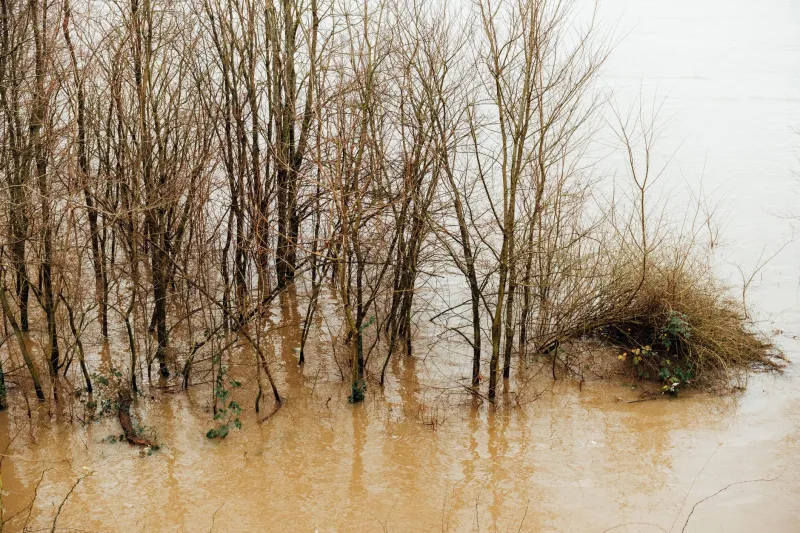
On a wet November morning, the Ogmore runs the colour of ploughed fields. Residents in the valley towns know the pattern: heavy rain, swollen river, and a sharp question about what has just entered the water. That question has become sharper in 2026 because it now arrives alongside another increase in household water bills. People are not simply asking whether the river looks clean. They are asking what their money is buying, and whether anyone can prove it.
What a storm overflow is, and is not
A storm overflow, often called a combined sewer overflow, is a relief valve in the sewer network. In older parts of Bridgend's valleys, rainwater and foul water can share the same pipes. In intense rain, the system can overload. The overflow releases diluted sewage into a watercourse to prevent it backing up into homes, gardens and streets. That is the design. It is not an accident in every case.
But design is not absolution. Overflows operate under permits, and the conditions attached to those permits matter. Their existence does not mean a discharge is harmless, and it does not mean the public should accept frequent spills as the price of a working sewer. The test is whether the network is being maintained, whether investment is reducing reliance on overflows, and whether the public can see the record.
The Ogmore and the Llynfi are not abstract waterways. They run through communities that use them for walking, angling and the ordinary business of living near water. In Maesteg, Ogmore Vale, Pontycymer and the villages around them, the river is part of the place. When it carries visible evidence of discharge, trust in the water company and the regulators erodes just as surely as the banks.
The bill arrives before the river clears
Households in Bridgend will see the 2026 bill as a household cost, not a regulatory instrument. That is understandable. Welsh Water's charges have risen as the company funds the 2025 to 2030 investment period. Ofwat's settlement allowed higher bills in return for a programme that includes work on storm overflows, treatment works and the wider sewer network. The logic is that customers pay now for infrastructure that should have been built earlier.
There is a fairness problem at the heart of that logic. Many residents are being asked to pay more for a legacy they did not create. They are also being asked to trust a timetable they cannot easily inspect. A bill is not a receipt for a cleaner river. It is a promise. The promise has to be tested against named schemes, published dates and measurable reductions in spills.
That is why the debate in 2026 should not stop at the size of the increase. The more important question is what the increase delivers in the Ogmore and Llynfi catchments, and how quickly. A general statement about investment is not the same as a schedule for the overflow at the end of a specific street.
Reading the local record
Storm overflow monitoring has improved over recent years, but monitoring is not the same as enforcement. Event duration monitors record when overflows operate. The published record for the most recent monitoring year should be read with care: it shows frequency, duration and location, but it does not by itself explain why a particular overflow ran, whether it was permitted, or what the company is doing to reduce reliance on it.
Residents are entitled to ask for that local detail. Which overflows in the Ogmore and Llynfi catchments are scheduled for improvement under the current investment programme? What standard will they be required to meet? By what date? What interim measures will be taken while construction is pending? How many spills will the scheme actually prevent in a typical year?
Those questions are not technical niceties. They are the difference between a capital programme and a credible plan. Without them, a rising bill can look like a levy on patience.
What the 2026 investment plans must prove
The investment programme should be judged on outcomes, not announcements. Storage tanks and sewer upgrades have a role, but so do maintenance, sewer separation where feasible, sustainable drainage and better use of nature-based solutions. The cheapest spill is the one that never reaches the river because the network was maintained and the surface water was kept out of the foul sewer in the first place.
Bridgend also needs to see how new development is being managed. Housing growth without adequate drainage capacity simply transfers the problem downstream. The council's planning and drainage functions, Welsh Water's network modelling and Natural Resources Wales's regulatory oversight all have to meet at the same point. Residents should not have to discover a capacity problem only after the first winter storm.
If you see something, record it properly
Public reporting matters, but it works best when it is specific. If you witness a suspected pollution incident or an overflow discharging in dry weather, note the time, date, exact location, weather conditions and what you can see. Photographs and video are useful. Do not enter the water.
- Report environmental incidents to Natural Resources Wales on its 24-hour incident line, 0300 065 3000. Ask for a reference number.
- Report sewer flooding and pollution to Welsh Water's incident line. Keep the reference they give you.
- Tell Bridgend County Borough Council if the issue affects a road, public land or a planning matter. Ask which department owns the response and when you will receive an update.
- If you are a member of an angling club, community group or river trust, keep a simple log. Patterns matter.
Questions that deserve answers
Residents who have contacted my office about water quality are not asking for miracles. They are asking for a clear line of accountability. The council should be able to say how it uses its scrutiny, planning and environmental health powers. Welsh Water should be able to publish a local schedule of works. Natural Resources Wales should be able to explain how it regulates and enforces. The Welsh Government should be able to say what it expects from the investment period.
A useful request to any of them is simple: tell us which overflows serve our communities, how often they operated in the last monitoring year, what is planned, what it will achieve, and by when. If the answer is that the data is not held in that form, that itself is a finding.
A bill is a contract
The rain will keep falling. The rivers will keep rising. The question for 2026 is whether the institutions responsible for the sewer network will be as visible as the problem. Customers can pay more for a credible plan. They should not be asked to pay more for a promise that no one is willing to timetable.
The Ogmore and the Llynfi keep their own record. Our job is to make sure the people who are billing households for their future are asked to keep one too.