A Space Denied: Blue Badges, Blocked Bays and the Access Gap in Bridgend
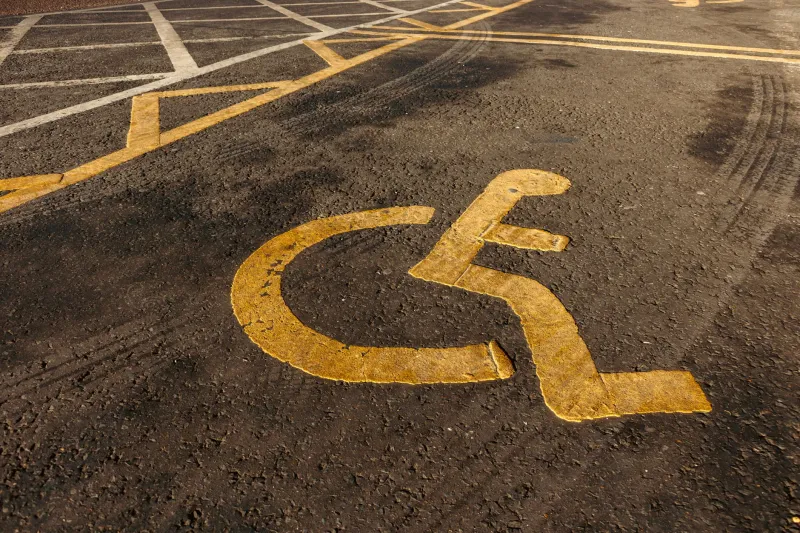
For most motorists, a parking space is a minor convenience. For a Blue Badge holder, it is often the difference between keeping an appointment and abandoning it; between reaching the high street and turning back at the kerb. In Bridgend, the badge itself is rarely the problem. The gap lies in what happens around it: applications that take too long, bays that are blocked, pavements treated as extra parking, and an enforcement culture that too often leaves disabled residents doing the advocacy themselves.
As your Member of Parliament, I hear these stories in the constituency office week after week. They are not abstract complaints. They are the practical arithmetic of disability in a county borough where bus services are thin, car dependence is high, and a dropped kerb can decide whether someone reaches the pharmacy or turns for home.
The badge is a key, not a privilege
Blue Badges are administered in Wales by local authorities under guidance from the Welsh Government. They are not a courtesy card or a badge of honour. They are a reasonable adjustment, designed to shorten the distance between a disabled person and the ordinary business of life.
In Bridgend, applications and renewals are handled by Bridgend County Borough Council. The scheme covers people with severe mobility difficulties, including some with non-visible conditions, and it depends on evidence: medical reports, benefit awards, specialist assessments. That evidence takes time. But delay has consequences. A badge that expires while a renewal is being processed can leave someone unable to park near work, hospital or family. It can turn a routine trip into an expedition.
Residents have told my office of being asked to reapply, to supply further evidence, or simply to wait while a decision is made. Some councils publish processing times and operate urgent renewal routes. Bridgend should do the same, plainly and publicly. A named contact for urgent renewals is not bureaucracy for its own sake. It is the difference between dignity and exclusion.
When the bay exists on paper but not in practice
Bridgend has disabled bays in town centres and at retail parks, but a bay is only useful if it is available and usable. In recent months, residents have reported bays occupied by vehicles without badges, bins left in accessible spaces, and pavements blocked by parked cars in Maesteg, Porthcawl and parts of Bridgend town centre.
The consequences are not theoretical. One wheelchair user in Porthcawl, whose name I have changed, described being forced into the carriageway because a car had mounted the pavement outside a row of shops. A resident in Maesteg spoke of abandoning a hospital appointment because the only accessible space near the health centre was occupied. These are not isolated incidents, and they are not matters of manners alone. They are failures of access.
Pavement parking is the other side of the same problem. When a vehicle blocks a footway, a wheelchair user, a parent with a pushchair or an older person with a walking frame is pushed towards traffic. In areas with narrow pavements and fast roads, that is a risk no resident should be asked to take.
What the council can actually change
Bridgend County Borough Council holds several levers. It can publish clear application and renewal performance data. It can introduce a renewal reminder and a fast-track route for urgent cases. It can audit disabled bays for dimensions, signage and obstruction. It can enforce parking restrictions and respond to reports of blocked accessible spaces. It can consult disabled residents before changing parking orders, rather than after. And it can ensure that council-run car parks and public buildings meet the access standards the council itself sets.
None of this requires new Westminster legislation. It requires administrative will and a willingness to be measured on results.
Where the powers really sit
Constituents deserve a plain-English answer about who can fix what. The Blue Badge scheme in Wales is devolved. The Welsh Government sets eligibility and guidance, and it holds powers over pavement parking. The council administers the scheme and enforces parking. Westminster controls the disability benefit rules that determine whether someone can afford adapted transport, and it sets the framework for disability rights under the Equality Act.
That division matters. A resident who rings my office asking why the UK Government has not fixed a Bridgend application delay is understandable but misdirected. Equally, it would be wrong to pretend that Westminster has no role. UK Ministers can reform disability benefit assessments, strengthen accessibility requirements, and ensure that national transport policy does not leave disabled people behind. The Welsh Government can review Blue Badge guidance and fund administration properly. The council can act now on the things within its gift.
If you are struggling now
A few practical steps can help. Apply for a renewal well before expiry, and keep copies of everything you send. If a renewal is delayed, ask the council for an urgent review and record the date of your request. If a disabled bay is blocked, report it with the time, location and a photograph where it is safe to take one. Do not confront drivers. Contact your local councillor, your Member of the Senedd, or my office if you need help navigating the system.
My office can write to the council on individual cases and will continue to raise the wider pattern with both the council and the Welsh Government. We cannot promise a badge will arrive faster. We can promise that the case will be recorded, pursued and used to argue for a better system.
The standard we should set
Bridgend is not alone in facing these pressures, but that is no comfort to the resident who cannot park, cannot pass, or cannot get through the door. An accessible town is not a niche concern. It is a measure of whether public space belongs to everyone.
The badge is a key. The bay is a promise. The pavement is a public service. On all three, Bridgend can do better, and those of us in public office should be held to that standard.